
SMT Process Validation in Small-Batch PCBA Assembly
The Necessity of SMT Process Validation
In industrial electronics and medical device manufacturing, Surface Mount Technology (SMT) process validation is a fundamental requirement during the New Product Introduction (NPI) phase. Small-batch PCBA assembly serves as the empirical testing ground to verify that every manufacturing parameter is correctly configured before a design enters mass production. Without this validation step, latent process defects migrate into large-scale runs, resulting in systemic yield failures and significant material waste.
Solder Paste Printing and SPI Optimization
The solder paste printing process dictates the structural integrity of the final solder joints. During NPI, process engineers focus extensively on optimizing this initial step to prevent downstream defects.
- Stencil Fabrication and Aperture Design: The NPI team evaluates the PCB pad layout to determine the appropriate stencil thickness. For boards combining fine-pitch components (such as 0201 or 01005 packages) with high-power components requiring large solder volumes, step-up or step-down stencils are often specified. Engineers optimize aperture geometries to reduce the risk of solder bridging on fine-pitch ICs and ensure adequate paste release for component adhesion.
- Solder Paste Selection: The selection of solder paste—considering alloy composition, particle size (Type 3, 4, or 5), and flux activity—is matched to the specific board finish and component density. Small-batch trial runs allow engineers to verify paste rollability and stencil transfer rates under actual production conditions.
- Solder Paste Inspection (SPI) Integration: Following paste deposition, SPI equipment measures the volume, area, and height of the deposited paste. During NPI, SPI data is critically analyzed to adjust print speed, squeegee pressure, and separation speed. This closed-loop correction ensures consistent paste volumes, directly preventing defects like insufficient solder, mid-chip solder balls, and tombstoning.

Component Placement Accuracy and Feeder Calibration
High-mix, low-volume PCBA manufacturing places rigorous demands on pick-and-place equipment. Frequent job changeovers require precise machine calibration to maintain placement accuracy.
- Feeder Setup Verification: Before initiating the small-batch run, all tape-and-reel, tray, and tube feeders undergo physical inspection and calibration. Misaligned feeder gates or worn feeder sprockets cause components to be picked outside the center tolerance, leading to placement offsets.
- Nozzle Selection and Maintenance: Engineers select nozzles based on component mass, geometry, and surface texture. Small-batch NPI runs validate the nozzle's ability to pick and place components without causing vacuum errors or dropping parts during rapid transit.
- Placement Offset Correction: Using first-article inspection data, engineers measure the actual placement coordinates of components on the board. If systematic offsets are detected, the placement program's coordinate database is updated to compensate for any discrepancies between the CAD data and the physical PCB.
Reflow Soldering Thermal Profiling
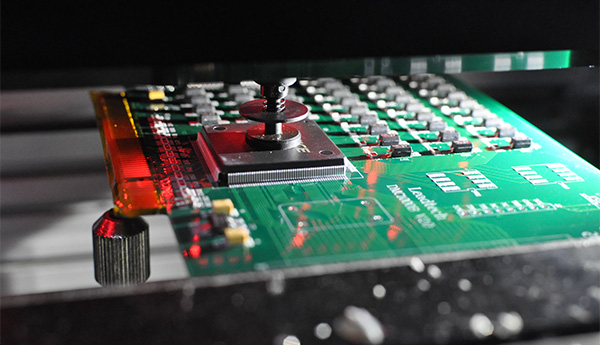
Establishing a robust reflow profile is one of the most critical outputs of the NPI process. The thermal profile must subject all components to temperatures sufficient for intermetallic formation without exceeding their maximum thermal limits.
- Thermocouple Attachment: Process engineers attach thermocouples to high-thermal-mass components, low-thermal-mass components, and dense routing areas on the PCB. This captures the thermal behavior across the entire board topology.
- Zone Parameter Optimization: The reflow oven zone temperatures and conveyor speed are adjusted to achieve the target ramp rates, soak times, and peak temperatures. Industrial boards often contain heavy copper layers and large power components that act as thermal sinks; the profile must provide sufficient heat input to these areas while preventing overheating of adjacent sensitive components.
- Voiding Reduction Strategies: For area-array packages like BGAs and QFNs, excessive voiding beneath the thermal pads compromises thermal transfer and mechanical strength. The NPI process evaluates different soak times and peak temperatures to drive out volatile organic compounds before the solder transitions to the liquid state, effectively minimizing void percentages.
Establishing Inspection Baselines
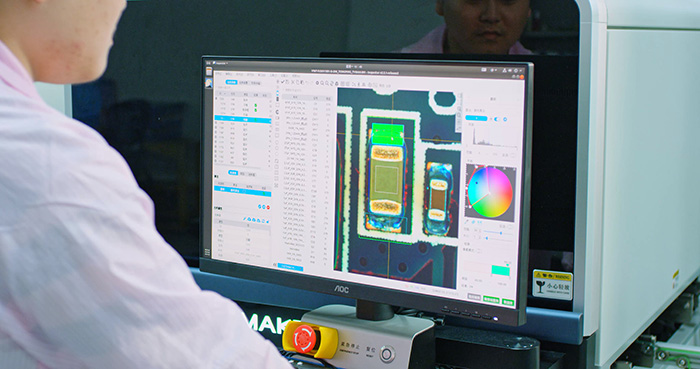
Small-batch process validation establishes the baseline parameters for Automated Optical Inspection (AOI) and X-Ray inspection systems.
- AOI Algorithm Tuning: Engineers run the first articles through AOI machines to tune the lighting, camera resolution, and inspection algorithms. This step differentiates between acceptable process variations (e.g., minor solder fillet shape deviations) and true defects, minimizing false call rates in mass production.
- X-Ray Criteria Definition: For hidden solder joints, X-ray inspection parameters are established to clearly resolve BGA balls, QFN side fillets, and through-hole barrel fill. The NPI team defines the acceptable void percentage and joint geometry criteria based on IPC-A-610 standards, ensuring consistent inspection criteria during subsequent production scales.

Frequently Asked Questions (FAQ)
1. Why is solder paste inspection (SPI) critical during the NPI phase? SPI identifies paste deposition anomalies—such as insufficient volume, bridging, or smearing—before components are placed. Correcting paste printing defects during NPI prevents costly rework or board scrapping after reflow, establishing a stable baseline for mass production.
2. How does NPI handle reflow profiling for boards with extreme thermal mass variations? Engineers use multi-point thermocouple profiling to map the thermal response of both high-mass and low-mass areas. The reflow profile is then optimized with an extended soak zone to equalize temperatures across the board, ensuring all joints reach reflow temperature without exceeding the peak limit of sensitive components.
3. What placement challenges are unique to high-mix, low-volume PCBA manufacturing? High-mix production requires frequent changeovers, increasing the risk of feeder setup errors and program data mismatches. NPI validates the complete bill of materials placement sequence, verifying feeder mapping and nozzle assignments to ensure zero placement defects during the initial small-batch run.
4. How are AOI and X-Ray inspection criteria finalized during process validation? First-article boards are utilized to calibrate inspection machines. Engineers adjust AOI lighting and algorithms to distinguish true defects from false calls, while X-ray criteria for void percentage and joint geometry are locked in according to IPC standards, ensuring repeatable inspection quality in mass production.
Latest information
Let the products quickly and stably realize marketization and become the global electronic intelligence innovation enabler
 2026-09-18