
Low Volume PCB Assembly for Industrial Equipment
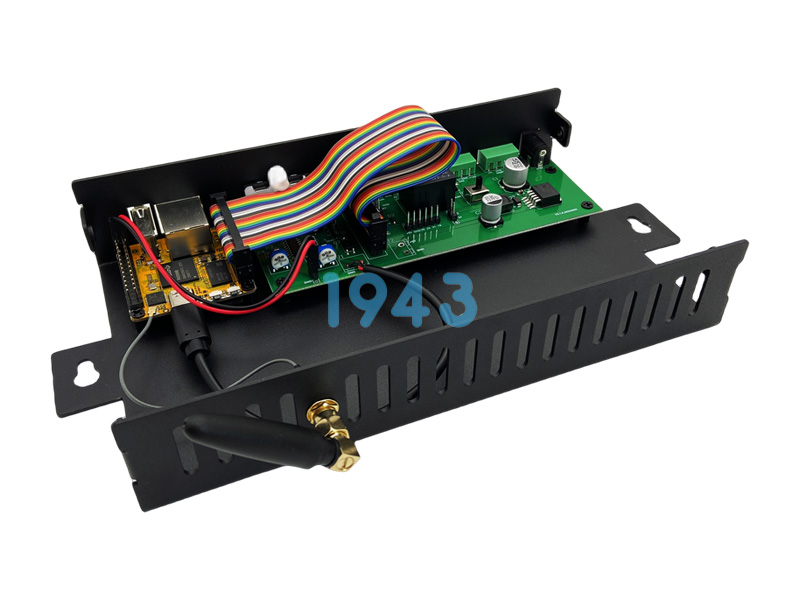
Low volume PCB assembly is commonly used for industrial equipment that requires specialized electronic assemblies, limited production quantities, and ongoing engineering support.
Unlike high-volume manufacturing, industrial equipment production often involves lower annual demand, multiple product configurations, longer product lifecycles, and engineering changes between production batches. A PCB assembly may be produced in quantities ranging from several dozen to a few thousand units depending on the product and production stage.
For engineering teams, low volume PCBA involves more than assembling a small number of circuit boards. The manufacturing process also needs to address BOM management, component sourcing, PCB fabrication, SMT assembly, through-hole assembly, inspection, testing, and engineering revision control.
What Is Low Volume PCB Assembly?
Low volume PCB assembly refers to the production of printed circuit board assemblies in relatively small quantities.
There is no universal quantity that defines low volume. Depending on the manufacturer and application, 20, 50, 100, 500, or several thousand boards may be considered low volume.
The defining characteristics are often related to the product rather than the exact quantity. Industrial PCB assembly may involve:
- Low or variable production demand
- Multiple PCB configurations
- Mixed SMT and through-hole components
- Specialized components and connectors
- Frequent engineering revisions
- Functional testing requirements
- Long product lifecycles
These requirements make manufacturing data and engineering coordination important parts of the PCBA process.

Why Industrial Equipment Uses Low Volume PCBA
Industrial equipment is often designed for specific applications rather than mass-market distribution.
Control systems, laboratory instruments, measurement equipment, networking systems, industrial controllers, and specialized monitoring equipment may have relatively limited production demand. At the same time, their PCBs can contain complex combinations of processors, communication interfaces, sensors, power circuits, memory devices, relays, and connectors.
This creates a situation where production volume may be low while manufacturing requirements remain complex.
Low volume PCBA allows manufacturers to produce the required quantity without assuming the production conditions of a high-volume product.
Low Volume PCBA During NPI
New Product Introduction is an important stage for industrial PCB assembly.
A new product may require several engineering builds before the design is released for regular production. These builds can support electrical validation, system integration, firmware development, environmental testing, and manufacturing validation.
Engineering changes are common during this stage. A component may be replaced, a PCB layout may be modified, or a connector may change following system testing.
Low volume production allows these changes to be introduced without creating large quantities of obsolete PCB assemblies.
BOM Management for Industrial PCBA
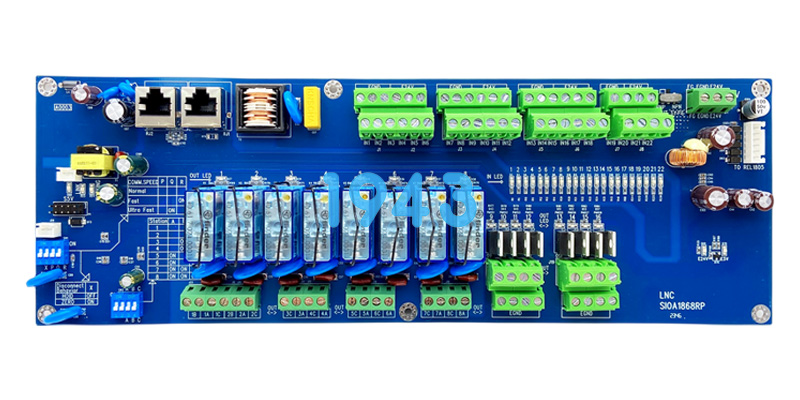
The bill of materials is one of the most important inputs for a low volume PCB assembly project.
Industrial PCBs may contain a large number of components with different manufacturers, specifications, package types, and availability.
A BOM review should normally consider:
- Manufacturer
- Manufacturer part number
- Component description
- Package
- Electrical value
- Tolerance
- Voltage or current rating
- Quantity per PCB
- Approved alternatives
- Lifecycle information
Generic descriptions can create ambiguity during component purchasing. For example, a resistor or capacitor may require additional specifications beyond its basic value.
Clear manufacturer part numbers and component specifications help connect the engineering design with the actual components purchased for production.
Component Sourcing for Low Volume Production
Component sourcing can be challenging when production quantities are limited.
Some industrial components may have long lead times, minimum order quantities, limited distribution, or lifecycle concerns. A component that is easy to purchase in prototype quantities may not be as straightforward when several hundred units are required.
Before purchasing, the BOM can be reviewed for:
- Long lead-time components
- End-of-life parts
- Obsolete components
- Limited-distribution parts
- Minimum order quantities
- Potential alternatives
Any proposed component substitution should be checked against the relevant technical requirements. Depending on the component, engineering approval may be required before an alternative is used.
DFM Review for Industrial PCB Assembly
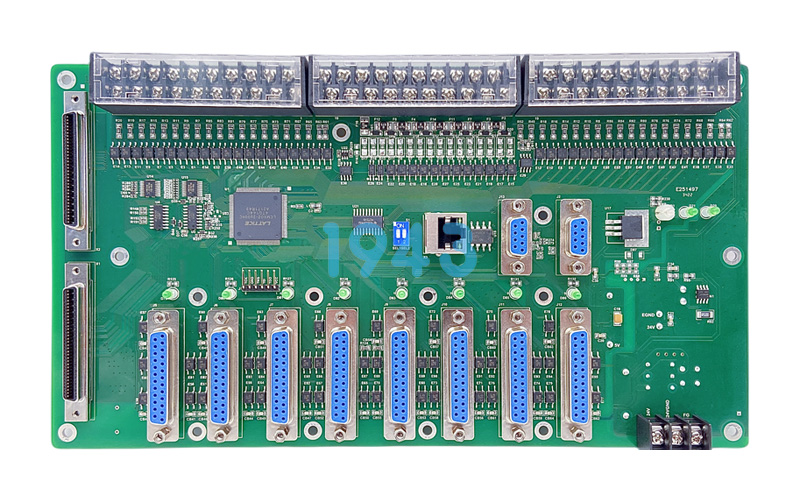
Design for Manufacturing, or DFM, examines whether a PCB design is suitable for the intended assembly process.
For industrial PCBs, DFM review may include:
Component Spacing
Adequate spacing supports automated placement, soldering, inspection, and potential rework.
Component Orientation
Consistent orientation makes assembly verification easier. Polarity-sensitive components should have clear orientation information.
PCB Edge Clearance
Components positioned too close to the PCB edge may interfere with assembly equipment, fixtures, connectors, or the final enclosure.
Thermal Distribution
Large copper areas and high-power components can affect heat distribution during soldering. Thermal differences across the board may influence soldering results.
Test Access
If electrical or functional testing is required, test points and fixture access should be considered during PCB design.
SMT and Through-Hole Assembly
SMT is widely used for industrial PCB assemblies because it supports high component density and automated placement.
Industrial boards may combine standard passive components with fine-pitch ICs, power devices, connectors, QFN, QFP, or BGA packages. Different component types can require different inspection and process requirements.
Through-hole components are also common in industrial equipment. Connectors, terminal blocks, switches, relays, transformers, and mechanically stressed components may use through-hole technology.
When SMT and through-hole components are combined, the assembly sequence should consider component height, soldering access, mechanical interference, and inspection requirements.
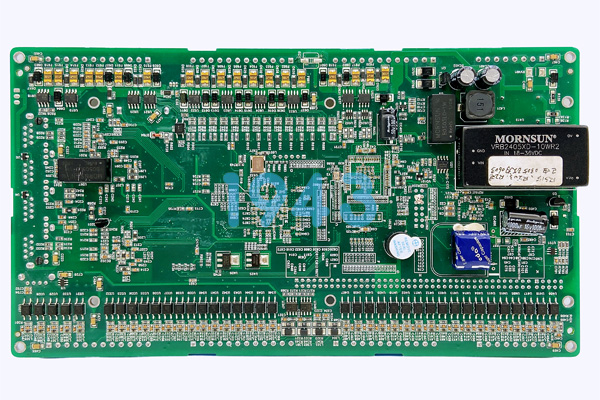
Inspection and Functional Testing
Inspection requirements should be defined according to the PCB design and product requirements. Common methods include:
- Solder paste inspection
- Automated optical inspection
- Visual inspection
- X-ray inspection
- Electrical testing
- Functional testing
AOI can identify visible assembly conditions such as component placement, polarity, and soldering issues.
X-ray inspection can be used for solder joints that cannot be adequately inspected visually, including certain BGA and other hidden-joint packages.
Functional testing is different from visual inspection. A PCB can have acceptable solder joints and correct component placement while still having an electrical or functional problem.
Depending on the product, testing may cover power inputs, current consumption, communication interfaces, analog signals, digital I/O, sensors, relays, programming, or other product-specific functions.
Engineering Change and Revision Control
Engineering changes are common during industrial equipment development.
A PCB may be revised because of electrical improvements, component availability, mechanical integration, or manufacturing feedback.
The manufacturing package should clearly identify the applicable:
- PCB revision
- BOM revision
- Pick-and-place data
- Assembly drawing
- Firmware version
- Test specification
This is particularly important when several versions of the same product are being manufactured at the same time.
Using inconsistent revisions can result in incorrect components, placement data, or test requirements being applied to a production batch.
Low Volume PCBA for Multiple Product Variants
Industrial equipment manufacturers may produce several versions of the same product platform.
The PCB may remain largely unchanged while certain components differ according to the required configuration. These differences may involve communication interfaces, memory, connectors, power specifications, or other functions.
Each configuration should have clearly defined manufacturing documentation.
This helps prevent one variant's BOM or assembly data from being used for another configuration during small production runs.
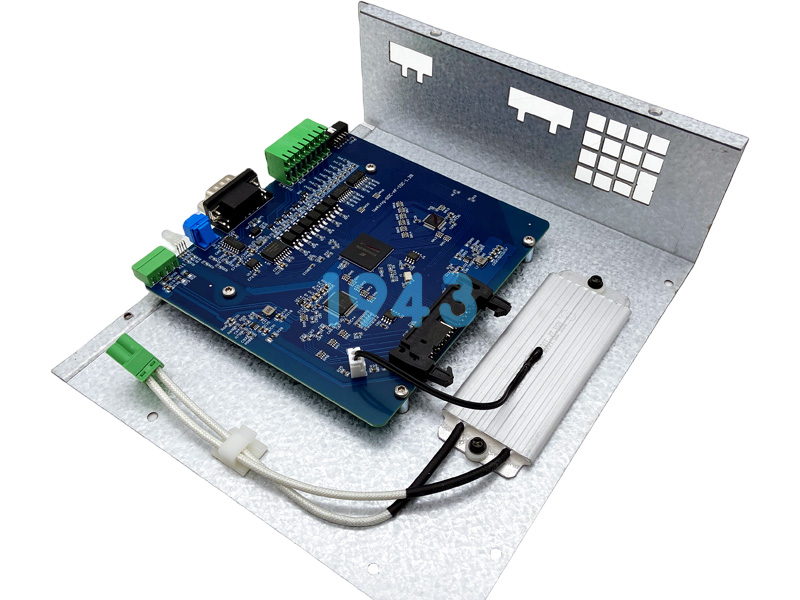
From NPI to Regular Low Volume Production
Not every industrial product needs to move from low volume production to high-volume manufacturing. Some specialized products remain low volume throughout their commercial lifecycle.
The important transition is from experimental builds to controlled production.
Before regular production, the manufacturing team should have a clear understanding of:
- Approved PCB revision
- Approved BOM
- Component sources
- Assembly requirements
- Inspection criteria
- Functional testing
- Programming requirements
- Product variants
- Engineering change procedures
Once these elements are established, subsequent production batches can be manufactured using a controlled engineering baseline.
Conclusion
Low volume PCB assembly is commonly used for industrial equipment where production quantities are limited, product configurations vary, and engineering requirements remain important throughout the product lifecycle.
The manufacturing requirements extend beyond component placement. BOM accuracy, component sourcing, DFM review, PCB fabrication, SMT and through-hole assembly, inspection, functional testing, and revision control all contribute to a controlled PCBA manufacturing environment.
For new industrial products, low volume PCBA provides a practical manufacturing stage between engineering prototypes and repeatable production. For established products, it can support ongoing small batch production, product variants, replacement boards, and long-term engineering changes.
The objective is to maintain a clear connection between the engineering design and the physical PCB assembly produced in each manufacturing batch.

Frequently Asked Questions
1. What quantity is considered low volume PCB assembly?
There is no universal quantity threshold. Depending on the manufacturer and application, low volume PCB assembly may range from several dozen to several thousand boards. Product complexity and engineering requirements are also important factors.
2. Is low volume PCB assembly suitable for industrial equipment?
Yes. Industrial equipment often has limited production demand, multiple configurations, long product lifecycles, and ongoing engineering requirements. These characteristics are commonly associated with low volume PCBA.
3. What files are required for low volume PCBA?
Typical manufacturing data includes the BOM, PCB fabrication files, pick-and-place data, assembly drawings, and component information. Inspection, programming, and functional test requirements should also be provided when applicable.
4. How are engineering changes managed during low volume PCBA?
Engineering changes should be linked to defined revisions of the PCB, BOM, assembly data, and applicable test documentation. This helps ensure that each production batch uses the correct engineering release.
Latest information
Let the products quickly and stably realize marketization and become the global electronic intelligence innovation enabler
 2026-11-10