
How Component Sourcing Affects PCBA Production
Component sourcing directly affects PCBA production. Completing the PCB design does not mean an assembly is ready for manufacturing. All required components must be available, correctly specified, and suitable for the assembly process.
This is particularly important for NPI and low volume PCBA, where engineering teams may still be dealing with component availability, BOM revisions, alternative parts, and changing production requirements.
A PCB assembly can be delayed by a single unavailable component. For this reason, component sourcing should be considered part of the PCBA manufacturing process rather than a separate purchasing activity.
Why Component Sourcing Matters in PCBA Production
Every PCB assembly depends on a defined bill of materials. If one or more components cannot be sourced, the complete assembly order may be affected. Common sourcing issues include:
- Long component lead times
- Parts that are out of stock
- End-of-life or obsolete components
- Minimum order quantities
- Limited distribution
- Unapproved substitutions
- Incorrect BOM information
- Special storage or handling requirements
These issues can be especially important for low volume PCBA because production quantities may be small while the BOM contains many unique components.
How the BOM Influences Component Sourcing
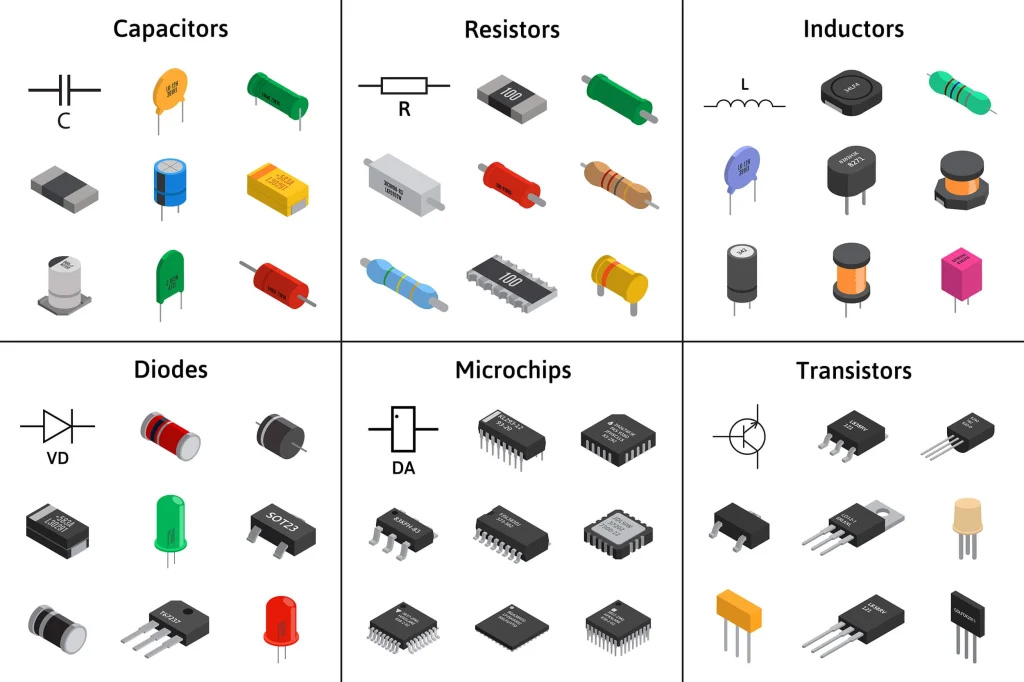
The BOM is the primary reference for component procurement. Depending on the product, it should identify information such as:
- Reference designator
- Manufacturer
- Manufacturer part number
- Component description
- Package
- Value
- Tolerance
- Voltage or current rating
- Quantity per board
- Approved alternatives
Generic descriptions can create uncertainty.
For example, “10K resistor” does not necessarily define the required package, power rating, tolerance, temperature characteristics, or manufacturer.
A complete BOM helps connect the engineering design with the actual components purchased for production.

Component Availability and Lead Time
Component availability can directly affect the PCBA production schedule.
A PCB may require hundreds of different components, each with a different supply situation. If one critical IC has a long lead time, assembly may have to wait even when all other materials are ready.
This is particularly relevant for:
- Microcontrollers
- Processors
- Memory devices
- Power management ICs
- Communication ICs
- Specialized connectors
- Sensors
Lead times should therefore be reviewed before a production date is finalized, especially during NPI and small batch manufacturing.
Minimum Order Quantities
Minimum order quantity, or MOQ, can also affect low volume PCBA.
A customer may require 100 PCB assemblies while a supplier sells a particular component in quantities of 500 or 1,000.
The remaining material becomes excess inventory unless it can be used for future production.
MOQ is more significant when the BOM contains specialized components that are not commonly stocked in small quantities.
For recurring products, excess components may be used in later builds. For one-time NPI projects, however, purchasing quantities require closer consideration.
Component Lifecycle Management
Component lifecycle status is important for industrial and specialized electronic products, particularly when they are expected to remain in production for several years.
During PCBA NPI, manufacturers and engineering teams may review whether key components are active, approaching end of life, or already obsolete.
Potential concerns include:
- Product lifecycle
- Future availability
- Replacement parts
- Last-time-buy requirements
- Approved alternatives
Lifecycle information does not automatically require a component change, but it can help identify future sourcing risks.
Approved Component Alternatives
When the original component is unavailable, an alternative may sometimes be used. However, a substitute should not be selected only because it has a similar description or electrical value.
Depending on the component, the alternative may need to be checked for:
- Electrical specifications
- Pin configuration
- Package dimensions
- PCB footprint
- Temperature range
- Voltage and current ratings
- Mechanical characteristics
- Soldering requirements
For integrated circuits, two devices with similar functions may still have different pin assignments or electrical characteristics.
Engineering approval may therefore be required before a substitute is introduced into production.
How Component Sourcing Affects PCB Assembly
Component sourcing can affect the assembly process as well as material availability.
Different components may have different package dimensions, thermal characteristics, moisture sensitivity, or soldering requirements.
A replacement component may meet the electrical specification but require a different footprint or create a new assembly issue.
For this reason, component alternatives should be evaluated from both electrical and manufacturing perspectives.
This is particularly important during NPI, when the PCB and assembly process are still being validated.
Component Sourcing and DFM
Design for Manufacturing can also be connected with component selection. A component may meet the electrical requirements while creating manufacturing difficulties because of its package or physical characteristics.
Examples include:
- Unusual package dimensions
- Fine-pitch terminals
- Limited soldering access
- Large thermal masses
- Components positioned close to connectors or mechanical parts
If a component must be changed, the replacement should be reviewed for both technical compatibility and assembly suitability.

Component Sourcing for Low Volume PCBA
Low volume production creates specific sourcing challenges.
An assembly may contain hundreds of BOM line items while requiring only a small quantity of each component. A specialized IC or connector may therefore be difficult to purchase in exactly the required quantity.
Early material planning can identify these constraints before production begins.
This allows the engineering and manufacturing teams to determine whether components need to be ordered earlier, sourced from another supplier, or evaluated for an approved alternative.
Component Sourcing During NPI
NPI provides an opportunity to identify sourcing problems before regular production. During an NPI build, the manufacturing team may discover:
- Difficult-to-source components
- Incorrect manufacturer part numbers
- Long lead-time parts
- Components requiring special handling
- Potential alternative components
- Components with unusual assembly requirements
These findings can be incorporated into future manufacturing documentation.
For example, an approved alternative can be added to the BOM after technical evaluation. This can provide additional sourcing flexibility for later production batches.
Customer-Supplied Components
Some PCBA projects use a combination of customer-supplied and manufacturer-sourced components.
Customers may supply proprietary parts, specifically qualified ICs, existing inventory, or components that have already been approved by their engineering team.
The BOM should clearly distinguish between customer-supplied and manufacturer-sourced components.
Quantities, packaging, delivery condition, and relevant documentation should also be defined before assembly.
Component Traceability
Traceability may be required for industrial and specialized electronic products. Depending on the project, production records can include:
- Manufacturer part number
- Supplier
- Component lot
- PCB production lot
- Assembly date
- Inspection results
- Test results
- Rework records
The required level of traceability depends on the application and customer requirements. Defining traceability requirements during NPI can make future production and troubleshooting easier.
How Sourcing Affects PCBA Cost
Component sourcing also influences the overall PCBA cost. Material cost is only one factor. Production planning may also be affected by:
- Minimum order quantities
- Lead times
- Shipping
- Supplier availability
- Alternative component evaluation
- Excess inventory
- Special storage requirements
For low volume production, a low unit price may not necessarily result in lower overall material cost if the required MOQ creates significant excess inventory.
Purchasing quantities should therefore be considered together with the expected production schedule.
Managing Sourcing Changes
Component availability can change between production batches.
A component that was readily available during NPI may later become constrained or obsolete. If a replacement is required, the change should be reviewed and documented according to the customer's engineering change requirements.
The BOM, assembly data, and PCB documentation should remain synchronized.
This is especially important for industrial products with long production lifecycles.

Conclusion
Component sourcing has a direct effect on PCBA production scheduling, material availability, manufacturing continuity, and engineering change management.
For NPI and low volume PCBA, the impact can be significant because production quantities are limited while BOM complexity can remain high.
A controlled sourcing process starts with an accurate BOM and continues through availability review, lead-time analysis, lifecycle monitoring, alternative component evaluation, and revision control.
The objective is not simply to purchase components. It is to ensure that the components used in PCB assembly match the engineering requirements and can be incorporated into production without creating unexpected manufacturing issues.
Considering component sourcing early in the PCBA NPI process provides better visibility for prototype builds, small batch production, and future manufacturing revisions.
Frequently Asked Questions
1. Why does component sourcing affect PCBA production?
PCBA production depends on having all required components available before assembly. A shortage, long lead-time component, obsolete part, or incorrect BOM item can delay the production build.
2. What information should a BOM contain?
A typical BOM should include the manufacturer part number, manufacturer, component description, package, quantity, and relevant electrical specifications. Approved alternatives and lifecycle information may also be included.
3. Can an unavailable component be replaced?
A replacement may be possible, but it should be evaluated against the original component's electrical, mechanical, package, and manufacturing requirements. Engineering approval may be required.
4. How should component sourcing be managed during NPI?
Component availability, lead times, lifecycle status, MOQ, and potential alternatives should be reviewed before the NPI build. Relevant findings can then be incorporated into the BOM and manufacturing documentation for future production.
Latest information
Let the products quickly and stably realize marketization and become the global electronic intelligence innovation enabler
 2026-11-10