
NPI PCBA Services for Low-Volume, High-Mix Production
Supporting Product Development Teams from Prototype to Manufacturing Readiness
For hardware product development teams, the transition from prototype to production is often the most demanding phase of the development cycle. This is especially true for low-volume, high-mix manufacturing environments, where each product may have unique requirements, component selections, and assembly challenges. At Shenzhen 1943 Technology Co., Ltd., we specialize in providing New Product Introduction (NPI) PCBA services tailored to this specific stage of product development.
Our services are designed for engineering teams and R&D departments that need reliable PCBA manufacturing support before committing to full-scale production. We focus on the small-batch, multi-variety segment where flexibility, technical communication, and manufacturing readiness are more important than high-volume throughput.
What Is NPI in PCBA Manufacturing?
New Product Introduction, or NPI, refers to the structured process of transitioning a product from the design and prototyping phase into a state where it can be manufactured reliably and repeatably. In the context of PCBA manufacturing, NPI involves more than simply assembling printed circuit boards. It includes design review support, component sourcing validation, process planning, assembly trial runs, quality verification, and documentation preparation for future production scaling.
For product teams developing industrial equipment, medical devices, communication modules, IoT hardware, or specialized instrumentation, NPI services help identify manufacturing risks before they become costly problems. A well-executed NPI process reduces the likelihood of assembly defects, component shortages, design-for-manufacturing issues, and unexpected delays during later production stages.
Why Low-Volume, High-Mix PCBA Requires Specialized Support
Low-volume, high-mix PCBA manufacturing differs significantly from high-volume contract manufacturing. In high-volume production, the focus is on efficiency, automation, and cost reduction across large quantities of identical boards. In low-volume, high-mix environments, each project may involve different board sizes, component types, soldering requirements, and quality expectations.
This type of manufacturing requires a service provider that can adapt quickly to changing requirements. Engineering teams often need multiple iterations of a board before finalizing the design. Component availability may change between revisions. Assembly processes may need adjustment based on test results. A manufacturer that only supports high-volume production may not provide the technical attention or process flexibility needed during this phase.
Our NPI PCBA services are built around these realities. We support product teams that require small batches with frequent design changes, mixed technology boards, and detailed manufacturing feedback.
PCBA Turnkey Services for Product Development
Our turnkey PCBA service covers component sourcing, PCB fabrication coordination, assembly, testing, and delivery. For product development teams, turnkey support reduces the administrative burden of managing multiple suppliers. Instead of coordinating with separate PCB fabricators, component distributors, and assembly houses, engineering teams can work with a single manufacturing partner during the NPI phase.
Component sourcing is one of the most critical aspects of turnkey PCBA services. During product development, some components may be difficult to source, have long lead times, or be approaching end-of-life status. Our team reviews bill of materials data to identify potential sourcing risks early. When necessary, we communicate with customers about alternative components, footprint compatibility, and supply chain considerations before assembly begins.
This approach helps prevent situations where a board cannot be assembled due to a single unavailable component. It also allows product teams to make informed decisions about component selection before moving toward production.
Design for Manufacturing Support
Design for Manufacturing, or DFM, is an essential part of NPI PCBA services. Many hardware designs function correctly in prototype form but encounter difficulties during assembly. Common issues include insufficient solder mask clearance, component placement too close to board edges, thermal pad design problems, inconsistent footprint sizes, and inadequate spacing for automated assembly equipment.
During the NPI phase, we review design data to identify potential manufacturing concerns. This review is not intended to replace the customer’s engineering judgment, but to provide practical manufacturing feedback based on assembly experience. By addressing DFM issues early, product teams can reduce rework, improve assembly yield, and shorten the overall development timeline.
DFM support is particularly valuable for teams that have strong electrical design capabilities but limited manufacturing experience. It is also useful for experienced teams working on complex boards where small design decisions can have significant effects on assembly quality.
Prototype and Small-Batch Assembly
Prototype and small-batch assembly is the core of our NPI service offering. We support engineering teams that need functional boards for testing, validation, certification preparation, pilot runs, and customer evaluation. Each batch may vary in quantity, complexity, and delivery requirements.
Our approach emphasizes accuracy and traceability rather than maximum speed alone. For product development teams, having correctly assembled boards with consistent quality is more valuable than receiving large quantities of boards with assembly inconsistencies. We maintain clear documentation throughout the assembly process so that each batch can be referenced during future production planning.
Small-batch assembly also allows product teams to validate their designs under real manufacturing conditions. Issues that may not appear during hand-soldered prototyping often become visible during professionally assembled batches. This includes soldering defects related to thermal profiles, component misalignment, solder paste volume issues, and cleaning requirements.
Quality Control During NPI
Quality control during the NPI phase serves a different purpose than quality control during mass production. In NPI, the goal is not only to verify that boards meet specifications, but also to understand how the product behaves during manufacturing. This information helps engineering teams prepare for future scaling.
Our quality control process includes incoming material inspection, solder paste inspection, assembly verification, visual inspection, and functional testing support when required. For complex boards, we work with customers to define appropriate testing methods based on product requirements.
Documentation is an important part of NPI quality control. Assembly records, inspection results, and process notes provide a reference for future production runs. This documentation helps ensure that lessons learned during the NPI phase are not lost when the product moves toward higher volumes.
Supporting Industrial and Specialized Electronics
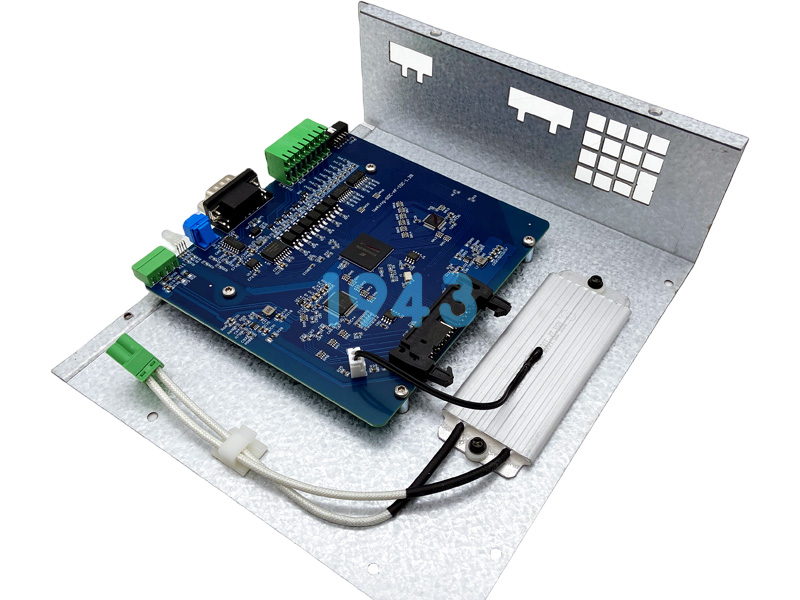
Our NPI PCBA services are suitable for a wide range of specialized electronics applications. This includes industrial control systems, power management hardware, communication equipment, instrumentation, automation modules, medical-related electronics, energy management devices, and custom embedded systems.
These applications often require careful attention to reliability, traceability, and component selection. They may also involve mixed technology assemblies that combine surface-mount components with through-hole parts, connectors, shields, or specialized modules. Our manufacturing process is structured to handle this diversity without requiring customers to simplify their designs unnecessarily.
Communication and Engineering Collaboration
Effective communication is essential during the NPI phase. Product development teams need timely responses to technical questions, clear updates on component availability, and accurate feedback on assembly results. We maintain direct communication channels with customer engineering teams so that issues can be resolved quickly.
This collaborative approach is particularly important when design changes occur between batches. Instead of treating each batch as an isolated order, we view the NPI process as a continuous development partnership. This allows us to provide more relevant manufacturing feedback and support better decision-making as the product matures.
Preparing for Production Scaling
One of the main objectives of NPI PCBA services is to prepare a product for future production scaling. A successful NPI process should result in a design that can be manufactured consistently, a bill of materials that is supported by reliable supply chains, and assembly processes that are well understood by both the customer and the manufacturer.
When product teams are ready to increase production volumes, the work completed during the NPI phase helps reduce risk. Manufacturing issues have already been identified and addressed. Component selections have been validated. Assembly processes have been tested. This foundation makes the transition to larger production runs smoother and more predictable.

FAQ
What types of products are suitable for NPI PCBA services?
NPI PCBA services are suitable for products that are transitioning from prototype to production, including industrial control boards, communication modules, instrumentation hardware, IoT devices, power electronics, and specialized embedded systems.
How does turnkey PCBA service benefit product development teams?
Turnkey PCBA service reduces the need to manage multiple suppliers by combining component sourcing, PCB fabrication coordination, assembly, and testing under one manufacturing partner. This simplifies procurement and shortens the development cycle.
Can design changes be supported between small batches?
Yes. Design changes are common during the NPI phase. We support multiple board revisions and work with engineering teams to update assembly processes, component sourcing, and documentation as the design evolves.
What is the difference between NPI assembly and mass production?
NPI assembly focuses on flexibility, technical feedback, and manufacturing readiness for small batches. Mass production focuses on efficiency, cost optimization, and high-volume throughput. NPI services help prepare a product for successful mass production.
Latest information
Let the products quickly and stably realize marketization and become the global electronic intelligence innovation enabler
 2026-11-10