

Navigating R&D Prototyping and Low-Volume Assembly
Transitioning an electronic product from a working prototype to mass production is a complex engineering challenge. In professional PCBA (Printed Circuit Board Assembly) manufacturing, the gap between design intent and manufacturing reality often leads to delays, especially during the pilot run phase.
Today, hardware teams require more than just a basic SMT (Surface Mount Technology) assembly vendor. They need a manufacturing partner with robust engineering capabilities, particularly in New Product Introduction (NPI), to ensure a smooth transition from the lab to the factory floor. This article explores the core elements of professional PCBA processing and how structured NPI services mitigate risks during R&D prototyping and low-volume assembly.
The Engineering Foundation of Professional PCBA Processing
Professional PCBA assembly is a systematic engineering process, not merely a matter of placing components on a board. From solder paste printing to reflow profiling, every parameter must be tightly controlled to ensure consistent yield rates.
-
DFM (Design for Manufacturing) Review: A professional SMT facility always starts with a thorough DFM analysis. Identifying design flaws—such as insufficient solder mask clearance, uneven pad sizes, or component spacing issues—before manufacturing begins prevents costly re-spins and production delays.
-
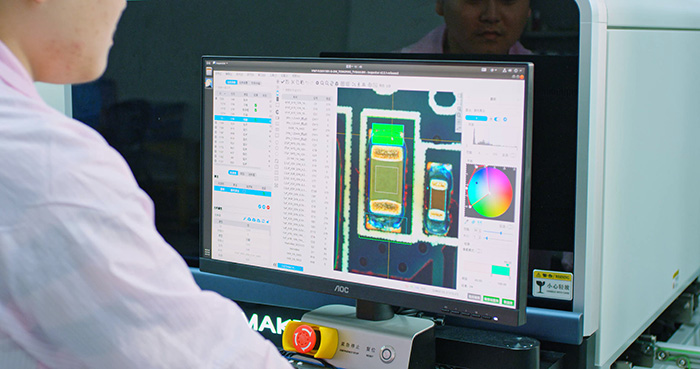
Process Control & Closed-Loop Feedback: Advanced process control relies on integrating inspection data. Linking SPI (Solder Paste Inspection) results with print parameters, and using AOI (Automated Optical Inspection) or X-Ray data to adjust reflow profiles, creates a closed-loop system. This continuous adjustment is what separates a standard assembly line from a professional PCBA operation.
The Role of NPI in PCBA Manufacturing: Bridging R&D and Mass Production
Many hardware projects perform flawlessly as hand-soldered prototypes but fail during scaled production. This typically occurs because the design was never subjected to a formalized NPI (New Product Introduction) process.
NPI serves as the critical bridge between R&D and full-scale manufacturing. It is the phase where the design is optimized for manufacturability and the assembly process is rigorously validated. During the NPI phase, an SMT facility focuses on:
- Process Route Planning: Defining the optimal component placement sequence, soldering profiles, and selective soldering requirements.
- Pilot Run Validation: Running a small batch to validate tooling, confirm BOM accuracy, and test fixture compatibility.
- Issue Convergence: Identifying and resolving latent design or process defects during the pilot run, then outputting a mature production control plan for mass production.
1943 Technology specializes in PCBA New Product Introduction (NPI) services. We understand the specific constraints of the R&D phase and provide systematic NPI support, helping engineering teams bridge the gap from a schematic to a fully manufacturable product.
Overcoming Challenges in R&D Prototyping and Low-Volume Assembly
The R&D prototyping phase is characterized by frequent BOM changes, diverse component packages, tight timelines, and small order quantities. Traditional SMT production lines, optimized for high-volume runs, often struggle with the agility required for pilot builds.
-
Agile Setup and Flexible Manufacturing: Low-volume PCBA manufacturing demands rapid changeover capabilities. A professional facility must be able to switch over lines efficiently, perform First Article Inspection (FAI), and complete the run without disrupting the main production schedule.
-
Material Kitting and Traceability: BOM modifications are common during NPI. Strict anti-error systems and component traceability are essential to prevent incorrect or substituted parts from making it onto the board.
-
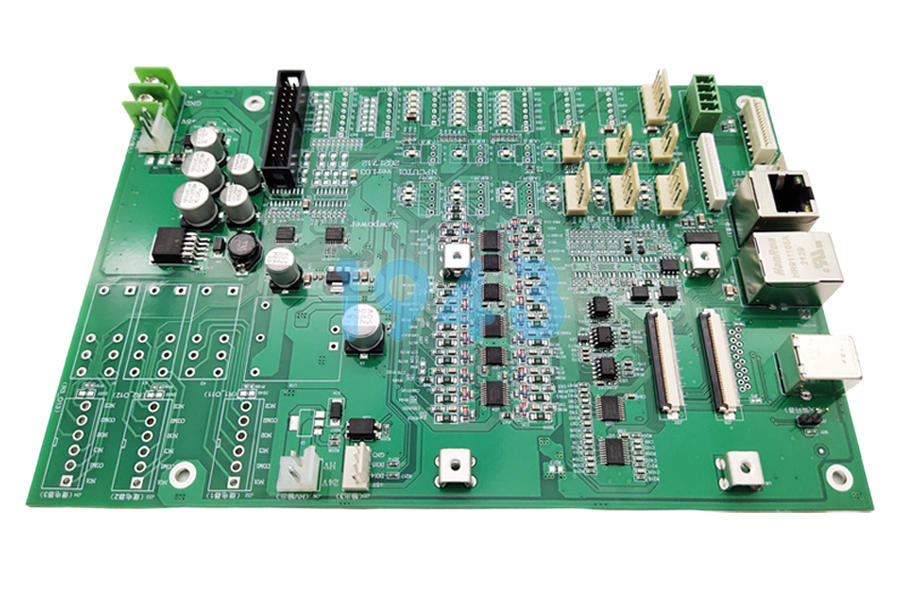
Low-Volume Box Build Assembly: A circuit board rarely exists in isolation; it needs to be integrated into an enclosure with wiring and hardware. 1943 Technology provides low-volume box build assembly services alongside SMT. Consolidating PCB assembly and final mechanical integration under one roof reduces logistical friction, minimizes transit damage, and shortens the overall project timeline.
Evaluating an SMT Assembly Partner: Key Criteria
When selecting a manufacturing partner for product development, hardware teams should look beyond basic per-board pricing and evaluate:
- Engineering Depth: Does the facility offer comprehensive DFM feedback and a structured NPI process, or do they simply build to print?
- Inspection Capabilities: Are SPI, AOI, X-Ray, and ICT/FCT integrated into the standard workflow to catch defects at the source?
- Capacity Allocation: Does the facility have dedicated lines or shift structures to prioritize NPI runs and low-volume orders without being deprioritized by large-scale production?
Frequently Asked Questions (FAQ)
Q1: What exactly is NPI service in PCBA manufacturing?
A: NPI (New Product Introduction) is a structured engineering process that bridges the gap between R&D and mass production. In PCBA manufacturing, it involves DFM analysis, process route design, pilot run execution, and defect analysis. The goal is to identify and resolve manufacturability issues before scaling to full production, ensuring higher yields and fewer delays.
Q2: What are the most common issues during R&D prototyping in SMT assembly?
A: During R&D prototyping, frequent issues include BOM errors leading to incorrect component placement, soldering defects (like tombstoning or bridging) caused by non-optimized pad designs, and challenges with process parameters for fine-pitch or QFP/BGA components. Additionally, frequent design iterations require strict material management to prevent assembly errors.
Q3: Why is low-volume box build assembly important during the prototyping phase?
A: Low-volume box build assembly integrates the assembled PCBA with enclosures, wiring, and sub-assemblies. Completing both the SMT and final mechanical assembly at the same facility ensures better alignment between the board design and the mechanical housing, prevents handling damage during transit between vendors, and provides a fully tested, functional unit ready for market validation.
Q4: What is the core service advantage of 1943 Technology in PCBA processing?
A: 1943 Technology’s core advantage lies in our specialized PCBA New Product Introduction (NPI) services. We focus specifically on R&D prototyping NPI and low-volume box build assembly. Our engineering team and flexible production lines are configured to support hardware teams through DFM optimization, rapid changeovers, and final product integration, ensuring a reliable transition from development to production.

 2026-05-22