

Optimizing PCBA Prototyping: The Strategic Role of NPI Project Management in Electronics Manufacturing
In the fast-paced electronic hardware industry, transitioning a complex design from the computer screen to a fully functional physical board is rarely a linear process. For hardware engineers, procurement specialists, and OEMs, the primary challenge during this phase is minimizing time-to-market while ensuring absolute manufacturing yield.
This is where a specialized New Product Introduction (NPI) Project Management approach to PCBA (Printed Circuit Board Assembly) manufacturing becomes a decisive competitive advantage. Rather than treating prototyping as a mere transactional service, structured NPI project management bridges the gap between raw electronic design and repeatable, scalable production.
The Core Bottlenecks in High-Mix, Low-Volume PCBA
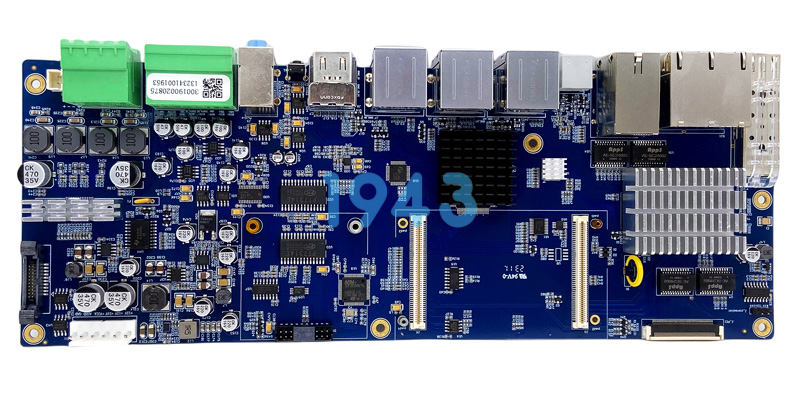
When dealing with high-density layouts—such as fine-pitch BGAs, 0201 components, and multi-layer stack-ups—traditional manufacturing lines often struggle. Standard high-volume SMT (Surface Mount Technology) setups are built for repetition, not the constant tracking, cross-functional communication, and risk mitigation that early-stage hardware requires.
The most common bottlenecks during the early stages of a hardware launch include:
- Siloed Communication: Engineering revisions not syncing with component procurement timelines, causing line stoppages or obsolete material waste.
- Component Footprint Mismatches: Discrepancies between the Bill of Materials (BOM) and the PCB footprint, leading to manual rework or line stoppages.
- Thermal Management Issues: Improper stencil design or incorrect reflow profiles causing cold solder joints or tombstoning.
Addressing these variables requires a dedicated NPI project management framework before the first solder paste is even printed.
The NPI Management Framework: Mitigating Risk from Kickoff to Assembly
At 1943 Tech, our NPI service is built around a rigorous Project Management Lifecycle. Every project is assigned a dedicated NPI Project Manager who coordinates directly with your engineering team, aligning your design milestones with our production schedules.
Our NPI project management framework relies on four fundamental pillars:
1. Cross-Functional Technical Gateway Reviews
Your design does not simply sit in a queue. Our NPI managers lead a cross-functional review involving DFM (Design for Manufacturing) engineers, SMT line managers, and component specialists. By reviewing trace clearances, via placements, and component spacing early, we identify layout anomalies in the digital domain—preventing costly manufacturing spins.
2. Sourcing & Critical Path Management
An efficient NPI project manager actively manages the project's critical path—the Bill of Materials (BOM). Using automated scrubbers and global sourcing networks, our managers verify component lifecycles (avoiding EOL or NRND parts) and track lead times to ensure long-lead components arrive exactly when the SMT line is scheduled.
3. Precision Stencil and Reflow Engineering
High-yield SMT placement depends heavily on the accuracy of solder paste deposition. We engineer custom laser-cut stencils tailored to the specific aspect ratios of your densest components. Our project managers ensure that custom multi-zone thermal profiling is established for your specific board layout to guarantee uniform wetting across varying thermal masses.

4. Continuous Feedback & Post-Build Reporting
The NPI process doesn't end when the boards are shipped. Our project managers compile a comprehensive DFM/DFM (Design for Manufacturing/Assembly) Feedback Report after the prototype run. This document highlights any clearance issues, component sizing variances, or assembly challenges encountered, providing your team with the exact data needed to optimize the design for mass production.
| Project Phase | Traditional PCBA Approach | 1943 Tech NPI Project Management |
| Project Initiation | File upload with minimal human verification. | Dedicated NPI manager assigned for full technical alignment. |
| Pre-Production | Components ordered blindly from files provided. | Comprehensive DFM/DFT review and BOM verification against footprints. |
| SMT Execution | Standardized, generic reflow profiles. | Board-specific multi-zone thermal profiling and live process tracking. |
| Post-Build Integration | Boards shipped; no data passed back to client. | Complete Post-Build Report detailing optimizations for future scaling. |
Why OEMs and Hardware Partners Trust 1943 Tech
For companies looking to launch complex hardware across industrial automation, telecommunications, medical devices, and aerospace applications, 1943 Tech acts as an agile manufacturing partner.
By prioritizing strict NPI project management, we deliver quick-turn PCBA prototypes without compromising on the documentation, data collection, and quality controls typically reserved for mass production. Our clients receive not just functional hardware, but a fully validated, production-ready manufacturing blueprint.
Frequently Asked Questions (FAQ)
1. Why is a dedicated NPI project manager necessary for a simple prototype run?
Even small prototype runs involve hundreds of variables, from component lead-time shifts to minor footprint errors. A dedicated NPI project manager serves as a single point of contact who bridges the communication gap between your design engineers and our factory floor. This ensures that any technical revisions or supply chain disruptions are resolved proactively before the boards hit the SMT line.
2. How does NPI project management accelerate total time-to-market?
While the pre-production review takes careful planning, it eliminates the unpredictable delays that ruin project schedules—such as discovering a component doesn't fit the footprint during mid-production, or experiencing high failure rates after reflow. Doing it right the first time eliminates the need for multiple prototype iterations (re-spins), saving weeks of development time.
3. What deliverables does 1943 Tech provide at the conclusion of an NPI project?
In addition to your fully assembled and tested PCBA hardware, we provide a detailed NPI Assembly Report. This document outlines our engineering findings, any component substitutions made due to supply chain availability, optimized oven temperature profiles, and explicit DFM recommendations to lower your costs during volume production.
4. How do your project managers handle engineering change orders (ECOs) during production?
Because our NPI workflow is digital and managed by a centralized project manager, ECOs are handled systematically. If an engineering change is requested, the NPI manager immediately freezes the affected stage, assesses the impact on the current BOM and Gerber files, updates the production tooling, and restarts the line safely with zero loss of version control.
 2026-06-04