

Optimizing NPI Success: The Critical Role of Fast-Turn PCBA and SMT Assembly in Hardware Innovation
In the fast-paced electronics industry, bringing a product from concept to market requires precision, speed, and seamless execution. The transition between initial electronic design and mass production is often the most vulnerable phase of a product life cycle. This critical phase is known as New Product Introduction (NPI).
For hardware startups and established enterprise engineering teams alike, choosing the right SMT (Surface Mount Technology) assembly and PCBA (Printed Circuit Board Assembly) partner for NPI can mean the difference between a successful market launch and costly project delays.
Why NPI Requires a Specialized PCBA Strategy
Standard high-volume EMS (Electronics Manufacturing Services) providers are optimized for predictability and repetition. However, NPI is inherently iterative. Early-stage PCBA runs frequently involve incomplete design files, component shortages, and last-minute engineering change orders (ECOs).
An NPI-focused PCBA service bridges the gap between design and manufacturing through several core engineering disciplines:
1. Design for Manufacturing (DFM) and Design for Testing (DFT)
Before a single component is placed on a board, a rigorous DFM review is essential. NPI experts analyze the Gerber files, Bill of Materials (BOM), and centorid data to identify potential manufacturing bottlenecks. This includes checking for pad-to-trace clearances, component spacing, thermal relief issues, and footprint mismatches. Catching these errors digitally prevents wasted fabrication cycles and material scrap.
2. Rapid Prototype SMT Assembly
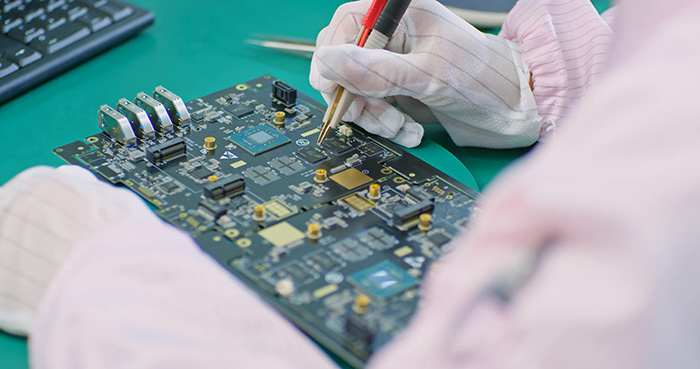
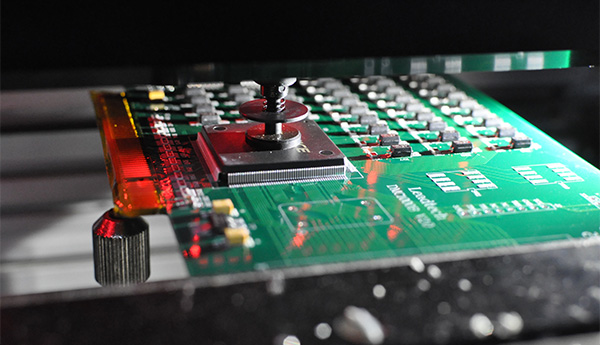
Speed is the primary currency of NPI. Fast-turn SMT lines must be agile enough to handle low-volume, high-mix orders without sacrificing quality. This requires state-of-the-art automated placement machines capable of handling complex components—such as fine-pitch BGAs, QFNs, and 01005 passives—with absolute precision.
3. Supply Chain Agility and Component Sourcing
NPI projects are highly susceptible to component obsolescence and long lead times. A specialized NPI partner utilizes robust global sourcing networks and real-time inventory tracking to find verified alternatives for hard-to-source parts, ensuring the assembly timeline remains on schedule.
The Core Phases of a Robust PCBA NPI Process
A successful one-stop PCBA NPI workflow is data-driven, transparent, and highly collaborative. The standard professional roadmap includes:
| Phase | Core Focus | Deliverables / Outcome |
| Engineering Review | Data validation & DFM/DFT analysis | Resolved BOM discrepancies & optimized layout feedback |
| Procurement | Bare board fabrication & component sourcing | 100% verified material kit matching engineering specs |
| SMT & THT Assembly | Precision component placement & soldering | Formed PCBA prototypes ready for inspection |
| Quality Assurance | Multi-layer testing and verification | AOI, X-Ray (for BGA), and Functional Testing reports |
| Feedback Loop | Manufacturing report for scaling | Detailed NPI report with recommendations for mass production |
Driving Lower Costs and High Yields in Mass Production
The ultimate goal of a one-stop NPI service is not just to build a working prototype, but to mature the product design for future scalability.
By analyzing the challenges faced during the initial SMT runs, engineers can optimize the assembly process, create custom testing fixtures, and refine the stencil designs. This continuous feedback loop ensures that when the product transitions to high-volume manufacturing, the yield rates are maximized, production cycle times are minimized, and overall unit costs are significantly reduced.
Frequently Asked Questions (FAQ)
Q1: What is the primary difference between standard PCBA prototyping and an NPI PCBA service?
A: Standard prototyping focuses strictly on building a specific number of boards based on the provided files, often ignoring underlying manufacturing flaws. An NPI PCBA service is a comprehensive engineering process. It includes DFM/DFT reviews, component supply chain optimization, and a detailed manufacturing feedback loop designed to prepare the product for seamless, high-yield mass production.
Q2: Why is a DFM review critical during the early stages of SMT assembly?
A: A Design for Manufacturing (DFM) review identifies layout errors, footprint mismatches, and thermal management issues before physical production begins. Resolving these issues early prevents costly board spins, avoids component damage, reduces manual rework, and ensures high assembly yield rates from the very first batch.
Q3: How do you handle fine-pitch components like BGA and QFN during NPI assembly?
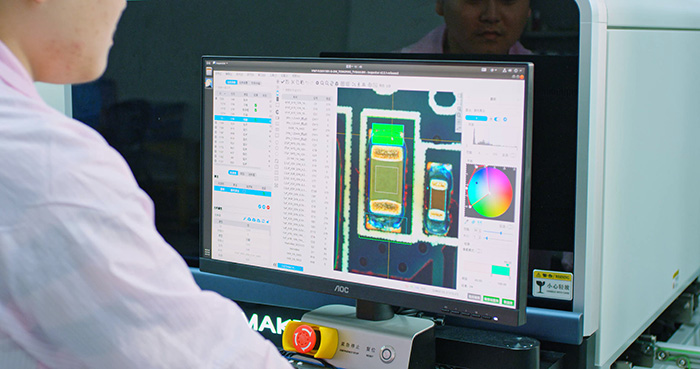
A: Fine-pitch components require advanced automated SMT placement equipment with high-resolution vision systems, precise solder paste printing stencils, and highly accurate thermal profiling in reflow ovens. Post-assembly, 3D Automated Optical Inspection (AOI) and Automated X-Ray Inspection (AXI) are mandatory to verify hidden solder joints, preventing shorts or voids underneath BGA/QFN packages.
Q4: Can a one-stop PCBA service assist when certain components have long lead times?
A: Yes. A specialized one-stop NPI provider actively cross-references the Bill of Materials (BOM) against global components databases during the initial engineering review. If a component faces shortages or long lead times, engineers will recommend pin-to-pin compatible alternatives or suggest minor layout modifications to keep the project on schedule without compromising performance.
 2026-06-02